
In vitro fertilization (IVF)
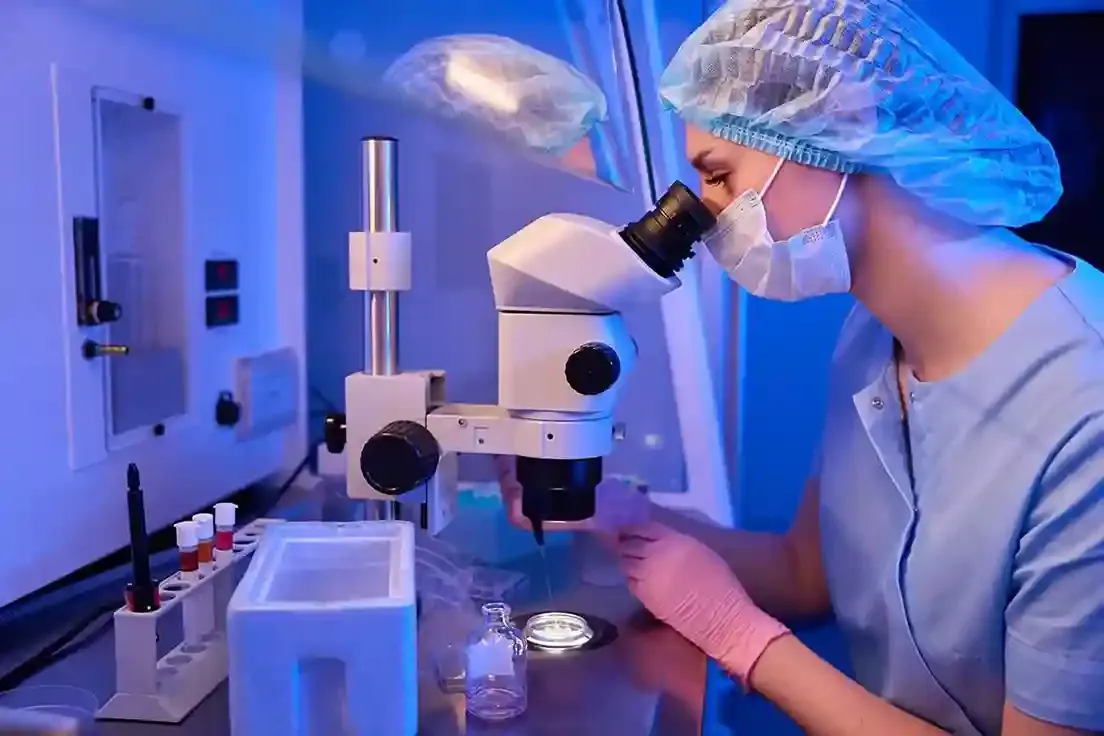
In vitro fertilization is the most complex assisted reproduction treatment — and the one with the highest success rate. Fertilization happens in a laboratory: the retrieved eggs are joined with sperm and the resulting embryo is transferred to the uterus.
IVF brings together, in a single treatment, the resources to overcome most obstacles to pregnancy. Carried out at the right time and with careful judgment, it is the assisted reproduction technique with the best chance of success — and it also allows embryos to be frozen for further attempts without repeating every stage.
When IVF is indicated
- Blocked or absent fallopian tubes
- Moderate or severe endometriosis
- Significant changes in semen analysis
- Failure of low-complexity treatments
- Advanced maternal age or low ovarian reserve
How it works
- 01
Ovarian stimulation
Hormonal medication stimulates the ovaries to develop several eggs in a single cycle.
- 02
Egg retrieval
The eggs are aspirated in a quick procedure, under sedation, guided by ultrasound.
- 03
Laboratory fertilization
Eggs and sperm are joined by the partner laboratory, which monitors embryo development.
- 04
Embryo transfer
One embryo is transferred to the uterus; the others can be cryopreserved for future attempts.
Frequently asked questions about IVF
How many embryos are transferred?
The number follows the rules of the Federal Council of Medicine, which vary with the woman’s age. The current trend is to transfer a single good-quality embryo, reducing the risk of multiple pregnancy.
How long does an IVF cycle take?
From stimulation to transfer, a cycle takes about two to three weeks. The result is confirmed by a blood test roughly twelve days after the transfer.
The laboratory phase — gamete handling, fertilization, culture and cryopreservation — is carried out by a partner laboratory, contracted separately, in accordance with the rules of the Brazilian Federal Council of Medicine.
The first conversation clears up more than months of uncertainty.
Talk to our team and understand, with no commitment, what the best next step is for you.